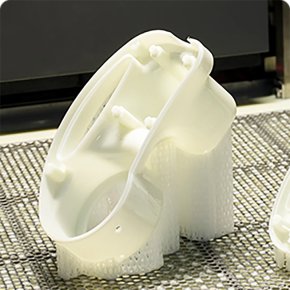
 SLA
SLA
Stereolithography
Resin materials
Online quoting
Five industrial processes — SLA, SLS, MJF, SLM and DLP — from appearance prototypes and functional testing to low-volume production. Upload a drawing for an instant quote.
Your drawings are kept strictly confidential
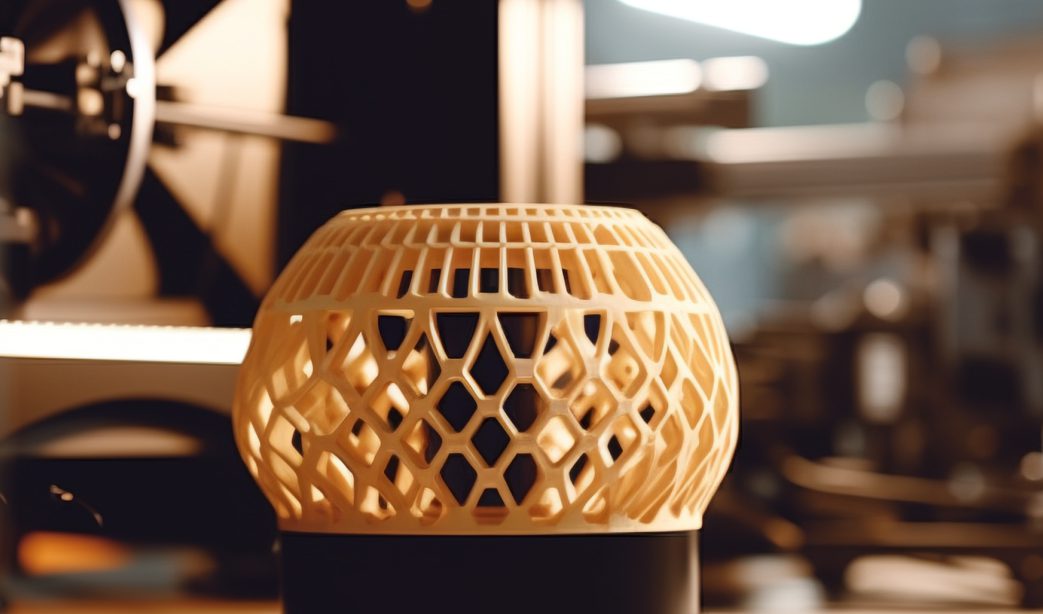
Pick a process by material and purpose: resin for appearance and fine detail, nylon for functional parts, metal for high-strength parts.
SLA
Resin materials
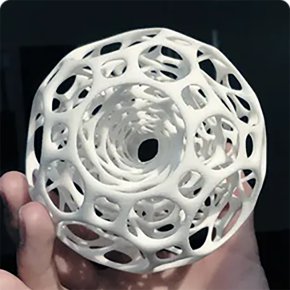 SLS
SLS
White nylon
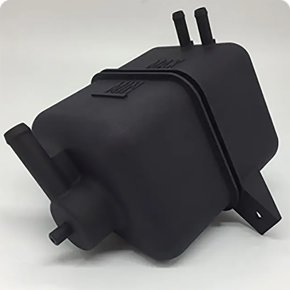 MJF
MJF
Black nylon
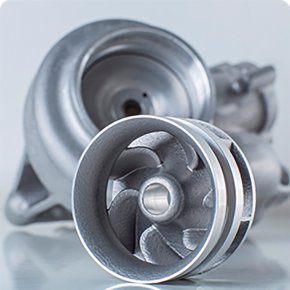 SLM
SLM
Metal materials
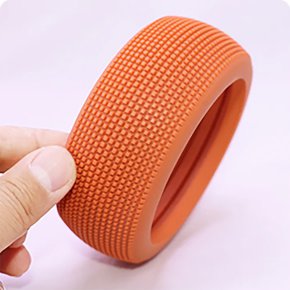 DLP
DLP
Red wax
Extremely fine detail that meets the strict requirements of precision manufacturing and keeps finished parts accurate.
MOMAKING's industrial-grade 3D printers can print extremely fine details, meeting the strict requirements of precision manufacturing and keeping finished parts highly accurate.
Industrial printers handle a larger build volume and can print large parts or many parts at once, making them well suited to batch production and large equipment.
They support a variety of high-performance engineering resins and are widely used in aerospace, automotive manufacturing, medical equipment and other critical fields.
MOMAKING's industrial-grade 3D printers combine excellent precision, a very large build size and wide material compatibility with stable, reliable performance. Whether it's complex parts or precise medical devices, they deliver excellent results.
 What we use
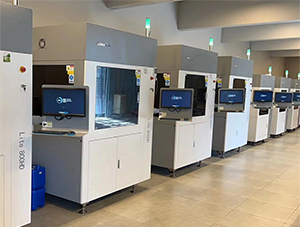
Industrial-grade 3D printers offer a large build size, high precision and fast speed, meeting the high-precision demands of industrial production. They use technologies such as SLS and SLM and are often used to make parts and molds for aerospace, automotive and medical applications.
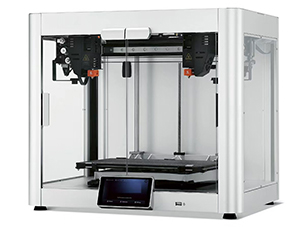
Desktop 3D printers are relatively compact and suit individuals, small studios and schools. They mainly use FDM technology and print small items without very high precision requirements, such as toys, models and creative ornaments.
Common materials and lead times. More materials are available when you request a quote.
| Material | Color | Process | Lead time | Properties |
|---|---|---|---|---|
| Imported photosensitive resin | White | SLA | 24H | High precision and a smooth surface, for appearance parts as well as structural, assembly and functional testing |
| Semi-transparent photosensitive resin | Semi-transparent | SLA | 48H | Smooth surface and strong detail, with excellent water resistance and dimensional stability |
| Transparent photosensitive resin | Transparent | SLA | 72H | Highly transparent and crystal clear, with high gloss and low water absorption |
| High-temperature (70°C) photosensitive resin | Yellowish | SLA | 24H | Excellent heat resistance for prototypes with higher temperature requirements |
| High-temperature (100°C) photosensitive resin | Beige | SLA | 48H | Excellent heat resistance for prototypes with higher temperature requirements |
| Nylon | Off-white | SLS | 72H | Excellent toughness and abrasion resistance, an all-round material widely used in industry |
| High-performance nylon | Black | MJF | 72H | Very high strength and good heat resistance, suited to small-batch parts |
| Red wax | Peach | DLP | 24H | High precision, fine detail and a smooth surface texture |
| Stainless steel 316L | Natural | SLM | 3-5 days | High tensile strength, heat resistance and corrosion resistance |
| Mold steel MS1 | Natural | SLM | 3-5 days | High hardness, wear resistance, hardenability and thermal fatigue resistance |
| Aluminum alloy AlSi10Mg | Natural | SLM | 3-5 days | High machinability and ductility with a good strength-to-weight ratio |
| Titanium alloy TC4 | Natural | SLM | 4-7 days | Lightweight, strong, tough and corrosion resistant |
Swipe to see the full table
3D printing, also known as additive manufacturing, creates three-dimensional objects by depositing successive layers of material under computer control. It can produce complex shapes and geometries that are difficult or impossible to make with traditional manufacturing methods.
3D printing involves a few main steps: first, a digital model of the object is created in computer-aided design (CAD) software. The model is then sliced into thin horizontal layers, and the 3D printer builds the object layer by layer following the model.
3D printing is used across many industries, including prototyping, product development, customization, rapid manufacturing and even healthcare, where it is used to make medical implants and prosthetics.