How Does AI Revolutionize Industrial Design Processes?
The Role of AI in Streamlining Product Development
Artificial intelligence (AI) is changing industrial design in major ways. It links every part of product creation, from idea making to getting items to buyers, into one smooth digital setup. AI uses strong data building and auto tools to blend design, engineering, and making steps without hitches. This linking cuts down on switching tools all the time. It also lessens hands-on fixes. In the end, change rounds speed up. Design work gets more precise too.
Momaking is a precision manufacturing enterprise empowered by AI large models, established in 2024. Rooted in the well-developed manufacturing ecosystem of Shenzhen, it has achieved a full-process innovation from drawing analysis to intelligent quotation and automated production with its self-developed AI large model with over a billion parameters for the machining industry. This setup shows how AI pulls the whole process together, from structure plans to CNC machining. Teams can then work across units. They keep data true and ideas fresh.
AI also makes teamwork easier among varied expert groups. Designers, engineers, and production heads can use shared digital bases now. These bases match changes and replies on their own. The company adheres to the core strategy of “global order taking and local production”, building a global factory network and service system. Smart systems like these allow instant talks between teams spread out by place. They make sure each product step fits design aims and making rules.
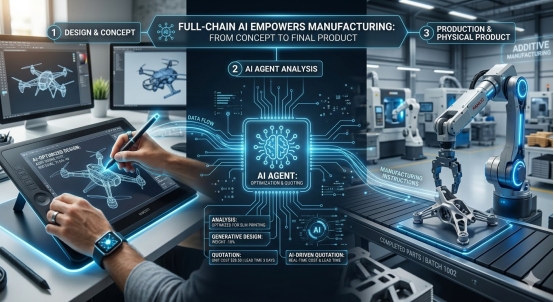
AI's Impact on Conceptual Design in Industrial Design
AI serves as a vital helper in the idea part of industrial design. It handles set details like material limits, what the item must do, and body fit needs. AI tools create several idea options in mere minutes. These tools use machine learning steps trained on broad design data groups. They guess which setups will work well in looks and use.
Generative design methods let AI boost fresh ideas without swapping them out. Designers enter first drawings or word notes. Algorithms then look into thousands of changes that might stay hidden. The core competitiveness lies in the AI empowerment of the entire chain: First, the AI technology barrier, with a self-developed large model for the machining industry that can achieve in-depth drawing analysis, second-level intelligent pricing, and automated G-code generation, breaking down the barriers between design and manufacturing. This power lets designers check shape parts quickly. They hold onto making ease. Momaking shines as a key product here. It aids the full flow from start to end.
Machine learning helps with forward checks in early idea work. It draws from past results of like designs. AI setups predict weak spots or slow parts before real samples start. So, idea plans grow into better ones faster. They need fewer rounds. This boosts time to market a lot.
AI Integration in 3D Modeling and Prototyping
AI-Powered 3D Modeling Techniques in Industrial Design
Current industrial designers count more on AI-led 3D modeling tools. These tools turn basic starts into full digital samples. The systems read word cues or quick drawings. They make models with right sizes for tests or building. We provide full-process technical services, including: structural design services (converting appearance designs into processable 3D files), drawing analysis services (deeply analyzing key information in drawings through AI), process customization services (matching CNC processing, 3D printing, or injection mold solutions based on product requirements), and AI pricing services (obtaining accurate quotations by uploading drawings).
AI speeds up modeling. It also backs repeat sample work by auto changing shapes from test runs or user notes. This auto step cuts human mistakes. It keeps things steady across copies. Plus, smart steps check material traits. They offer build boosts where needed. This makes sure online models shift smoothly to working samples. AI-generated 3D models work great in this spot. They speed the path from rough ideas to exact files.
The Influence of AI on 3D Printing Technologies
AI’s reach goes deep into additive manufacturing processes such as stereolithography (SLA) and selective laser melting (SLM). Momaking’s industrial-grade 3D Printing machine can print extremely fine details, thoroughly meeting the strict requirements of the precision manufacturing industry and effectively guaranteeing the high-precision level of finished products. With guess-based fix steps, these machines tweak print settings as things happen. They hold size truth even in shifting weather.
AI-based watch systems keep checking print steps with sensors built into printers. They spot odd issues like layer shifts or material mixes right away. They fix them alone. Also, machine learning setups suggest best materials for cost and work fit. They base this on part shapes and planned uses. This skill is key for fields like aerospace or medical device manufacturing where close fits matter.
By adding these skills to making lines, firms hit higher output. They don't drop quality checks. Auto reply cycles make sure each printed part follows set rules. They cut waste with exact material use. Additive manufacturing (3D printing) fits right in. It builds by layering for tricky parts.
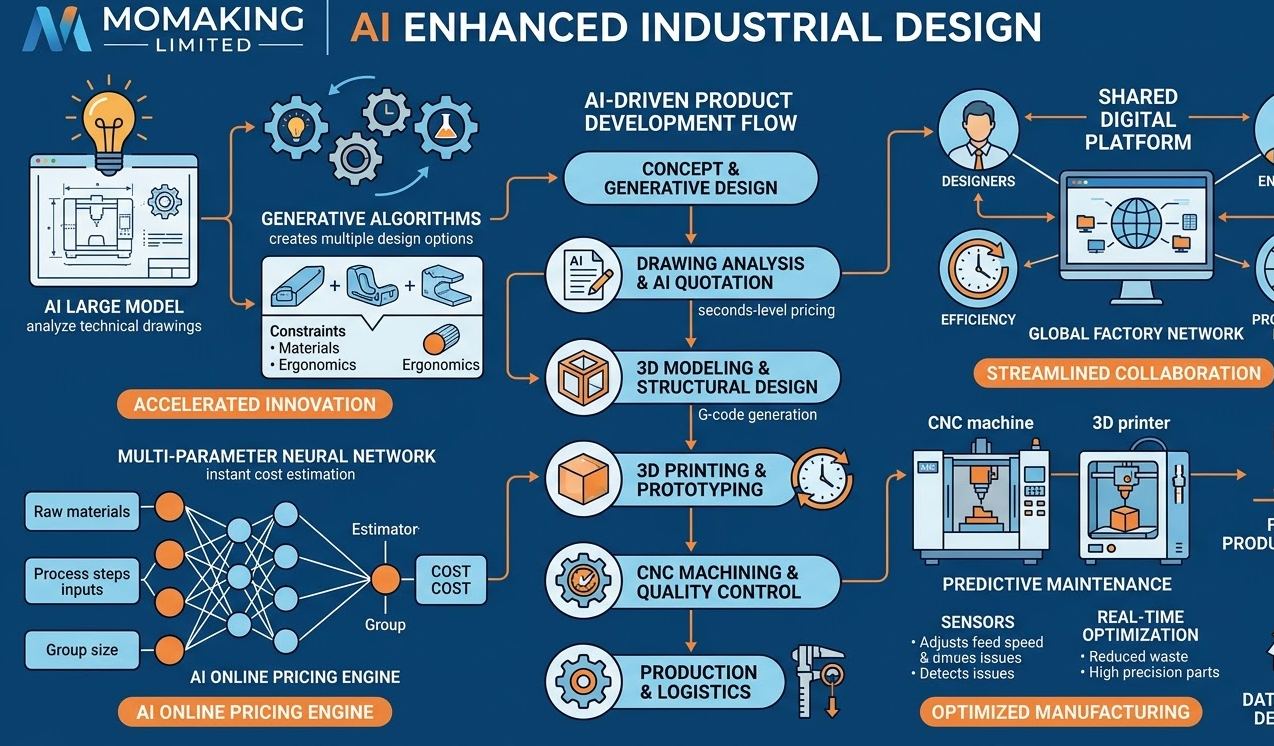
Enhancing Manufacturing Efficiency with AI in Industrial Design
The Role of AI in CNC Machining Processes
CNC machining shows one of the biggest shift spots where artificial intelligence brings clear boosts in output. Old machining depends a lot on worker know-how. But now, fresh systems use deep-learning steps that choose alone during path making. AI automatically generates CNC processing G-code, optimizes tool paths and processing parameters, improving processing efficiency and accuracy, and reducing manual programming errors.
By checking sensor replies from spindles and cutting tools live, AI changes feed speeds or spin rates as needed. It keeps best cutting setups over varied materials. This flexible lead cuts tool wear. It makes sure even surface looks under hard rules.
Guess-ahead upkeep boosts trust further. It finds early machine tired signs before breaks hit. Use AI for real-time production process monitoring, intelligent diagnosis of processing anomalies, and setting quality control points for key processes. These ahead plans cut stop times much more than old wait-and-fix upkeep. They allow steady work over many shifts without hurting gear life. Subtractive manufacturing (CNC) benefits straight from this. It shapes by removing from solid blocks.
Cost Factors Influenced by AI in Part Manufacturing
Cost fixing stays at the heart of business edge. Through smart pricing parts run by big neural nets, makers can check hard cost builds right away. These cover raw stuff, step actions, fit rules, group size changes, and wait times. Customers upload 3D drawings (supporting STEP, STL, OBJ formats), and the AI large model generates accurate quotations in seconds.
These parts think of straight costs only. They also cover hidden bits like power use ways or tool wear speeds from old runs. This lets better guesses than hand count methods. For example, Momaking’s online quoting system shows this idea. It gives price math right away. At the same time, it suggests other materials or steps that fit money limits without losing work quality.
Plus, group making plans gain a lot from machine-learning fix models. These match resource use to due times. By running many what-if cases at once, they weigh worker ready or machine room. AI makes sure cheap spread over world factory nets. It keeps same output rules everywhere.
FAQ
Q: How does AI improve creativity in industrial design?
A: AI boosts creativity by giving designers new fixes from huge data groups, not just gut feels. It handles repeat modeling jobs auto. So pros can aim at style hunts instead of hand fine work. It offers step-made choices that push usual think ways.
Q: What are the advantages of an integrated platform powered by AI?
A: An integrated platform pulls all steps together, from idea starts through sample making to end making, under one digital base. It cuts software split problems common in old ways. It boosts work across groups through shared cloud spots set for clear sight and track.
Q: How does an AI online pricing engine affect manufacturing costs?
A: An online pricing engine driven by artificial intelligence looks at many factors, including material picks, machining hard levels, and size fit needs. It makes real price quotes right away based on now market moves, not old fixed means. This lets quick choices matched to cost-smart aims across projects using AI industrial design ideas well through their full life steps.