CNC Machining Technology Applications Across Key Industries
What Makes CNC Machining Technology Essential in Modern Manufacturing?
CNC machining technology has become a core part of modern manufacturing. It delivers strong precision, steady results, and fast output. This method cuts materials with computer digital control. Operators set programs to guide the tool path. Such steps allow the creation of parts with complex shapes. The work stays accurate at every stage. The automated flow reduces errors from manual work. It also helps each part match the exact design needs.
Automation is another defining advantage. CNC machining can also use semi-automated or fully automated methods to manufacture hardware parts. You can integrate CNC machining equipment with robotics. This integration automates every machining operation in production. It helps raise production efficiency. The integration enhances repeatability and reduces human involvement in repetitive tasks. It ensures consistent quality even in large-scale production.
How Does CNC Machining Enhance Material Utilization and Production Efficiency?
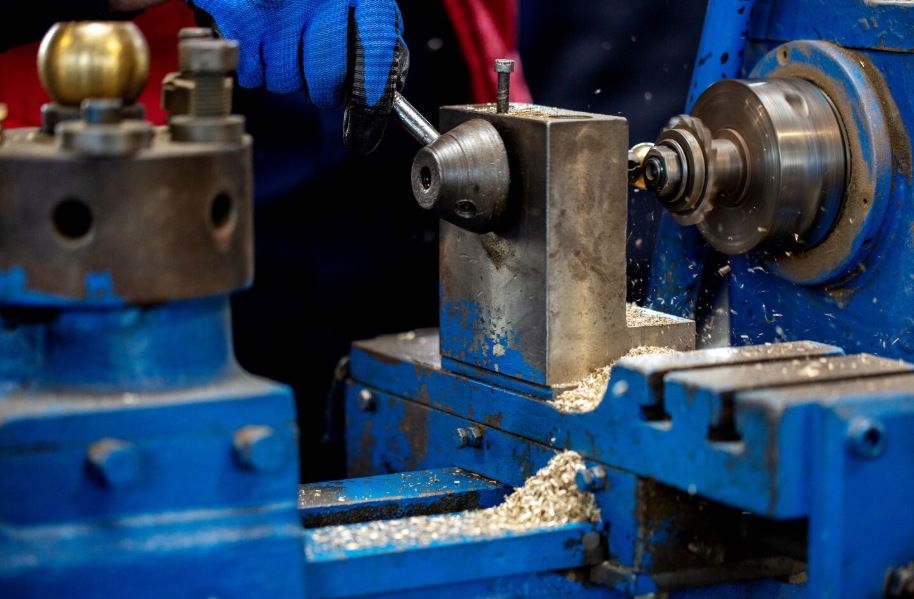
CNC machining helps get the most out of materials. It does this through smart programming and careful planning of tool paths. Multi-axis systems make it easier to create complex parts. They do this with fewer setups needed. This saves time and minimizes waste. CNC machine tools intelligently optimize the spindle speed and feed rate according to the material and processing requirements. Multiple axes work in coordination. This significantly reduces the processing time and shows high-efficiency advantages in batch production.
Additionally, the setup links up with CAD/CAM software. This link creates a smooth shift from digital design to physical production. CNC machining controls the machine tool movements through computer programs. It does this with high accuracy. It accurately sets the tool path and cutting parameters. This synchronization between design intent and execution ensures optimal yield from raw materials.
CNC Machining in Aerospace Manufacturing
Why Is CNC Machining Critical for Aerospace Components?
Aerospace manufacturing needs very high precision. This matters because even small errors might hurt safety or performance. When it comes to material choice, CNC machining faces few limits and handles many metals, non-metals, plus other substances. Such freedom lets engineers pick light but tough options like titanium alloys or aluminum alloys. These materials help boost aircraft efficiency in a big way.
Excellent repeatability also helps maintain uniform results from one batch to the next. CNC machining works well for components that need extreme accuracy in dimensions, shape, and surface quality. It allows the production of parts that stay reliable even under harsh conditions. These conditions often involve high temperatures or significant pressure.
Key Applications of CNC Machining in Aerospace Production
Engine and Turbine Components
High-speed milling produces turbine blades with aerodynamic precision essential for fuel efficiency. The controlled cutting parameters maintain tight tolerances that ensure reliable engine operation over long service cycles.
Structural and Landing Gear Parts
Landing gear shafts require robust strength to withstand high loads during takeoff and landing. Precision turning provides this structural integrity while maintaining alignment through accurate drilling for fuselage assembly.
CNC Machining Applications in Automotive Manufacturing
How Does CNC Machining Improve Automotive Production Quality?
Automotive manufacturers depend on CNC machining technology. They use it for both mass production and customization needs. This technology lets them machine vehicle components over and over. It keeps variations to a minimum. At the same time, it supports quick prototyping of new models. CNC machining offers strong repeatability along with good stability. These qualities make it a good fit for mass production runs.
The process supports durable components such as engine blocks or transmission housings that must endure mechanical stress. With controlled automation, production cycles are shortened without sacrificing quality or surface finish.
Common Automotive Components Produced by CNC Machines
Engine Systems
Precision-machined cylinder heads, pistons, and crankshafts serve as clear examples. Exact dimensions in these parts shape engine performance in a direct way. Fine milling creates smoother surfaces on the components. This step cuts friction losses inside engines.
Interior and Exterior Parts
Specialized molds for dashboards or trims come from multi-axis machines. These machines handle production with speed and accuracy. Rapid prototyping speeds up design checks for new models. It does this before full-scale manufacturing starts.
CNC Machining in Medical Device Manufacturing
Why Is Precision So Vital in Medical Component Fabrication?
Medical components need very fine precision. They touch human tissue or organs in a direct way. Medical tools need the same level of accuracy. This step keeps patients safe and makes sure the tools work as planned. Materials such as stainless steel or titanium must be cut to very close limits. This step ensures they stay safe for use with the body.
The smooth surface finish achieved through fine polishing prevents contamination risks during surgeries or implant procedures.
Typical Medical Devices Manufactured Using CNC Technology
Surgical Instruments and Implants
Orthopedic implants gain from 5-axis machining. This method copies anatomical structures in an exact way. Surgical instruments go through polishing operations. These steps produce sterile surfaces. The surfaces fit clinical environments well.
Diagnostic Equipment Components
Complex housings for imaging systems demand uniform wall thicknesses achieved via precision milling. Micro-machining enables small-scale components used in diagnostic sensors or laboratory equipment to meet functional reliability standards.
Integration of Smart Manufacturing with CNC Technology
How Are Digital Innovations Transforming CNC Operations?
Digital transformation turns traditional machine tools into smart systems. These systems handle their own optimization with ease. IoT sensors track machine performance all the time. Predictive maintenance algorithms warn operators before faults show up.
Cloud connectivity boosts teamwork between designers and machinists. It allows live updates on the shape of parts. It also permits changes to tolerances. These updates happen in plants worldwide. Such new ideas match the ideas behind smart factories. In these places, machines work with data tools. This leads to better results over time.
CNC technology drives smart manufacturing. It illustrates how digital control combined with advanced robotics leads industries toward higher autonomy levels while maintaining precision standards.
Momaking’s Contribution to Precision Manufacturing Solutions
Who Is Momaking and What Are Momaking Core Competencies?
At Momaking, we provide advanced CNC machining solutions. These fit the needs of aerospace, automotive, and medical sectors. We blend automation with precision tooling. Digital control systems support the work. They keep product quality steady through every stage of production.
Quick prototyping works well with batch production. We take a minimum order of just one piece. Delivery can happen in as little as two days. Our smart quoting system gives a quote in three seconds. Every order gets a full check before it ships out. This step brings quality you can count on without extra worry. These features reflect our commitment to efficiency from concept to completion.
Momaking’s Product Portfolio in the Field of CNC Machining Technology
High-Tolerance Metal Components
We manufacture high-tolerance metal parts using multi-axis machining centers designed for superior accuracy across all dimensions.
Custom Prototyping Services
Our rapid prototyping solutions shorten development timelines while maintaining fidelity between prototype models and final products.
Comprehensive Production Support
We begin with design discussions and carry this through to the last review phases. We deliver full support at every step. Each part fits the exact needs set by our clients. We keep complete tracking during all manufacturing runs.
FAQ
Q: What materials can be processed using CNC machining technology?
A: CNC machines process many metals with ease. Aluminum, titanium, and stainless steel stand out as common choices. These machines also work well with plastics. PEEK and nylon serve as good examples here. The right pick always depends on what the job requires.
Q: How does CNC machining differ from traditional manufacturing methods?
A: Different from manual machining processes, which depend only on the skill of the operator, computer numerical control gives higher accuracy. It uses movements set in advance. These movements help keep results the same over many runs.
Q: Is CNC machining suitable for small-batch or prototype production?
A: Yes. Its adaptable programming supports fast configuration adjustments. This makes it perfect for large-scale production. It also works well for small-batch test models. Here, quick personalization is needed. Yet it maintains high-quality control benchmarks.