What is an AI Creative Engine and How Does it Benefit Modern Marketers?
Understanding the AI Creative Engine in Marketing
An AI creative engine marks a fresh phase in smart design and production blending. It serves as an AI industrial design agent. This tool offers marketers and designers a smooth method to turn imaginative ideas into buildable products. AI intelligent agents for industrial design-AI Creative Engine. The platform applies AI-driven design ideas to speed up idea creation, 3D modeling, and production setup.
A standout trait of an AI creative engine is its skill in platform integration and tool consolidation. The whole process covers everything from "one-sentence description" to "generating 3D models" and then to "placing an order and manufacturing." The main benefit lies in the platform's unity. It lets users work without jumping between tools. For today's marketers, this setup allows handling product brainstorming, visualization, and prototyping in one single space. It simplifies tasks and cuts reliance on various software programs.
The seamless transition from concept to manufacturing makes sure that marketers can shift from creative thinking to real product creation without tech hiccups. This method opens up access to pro-level design skills. It enables non-engineers to join product innovation right away.
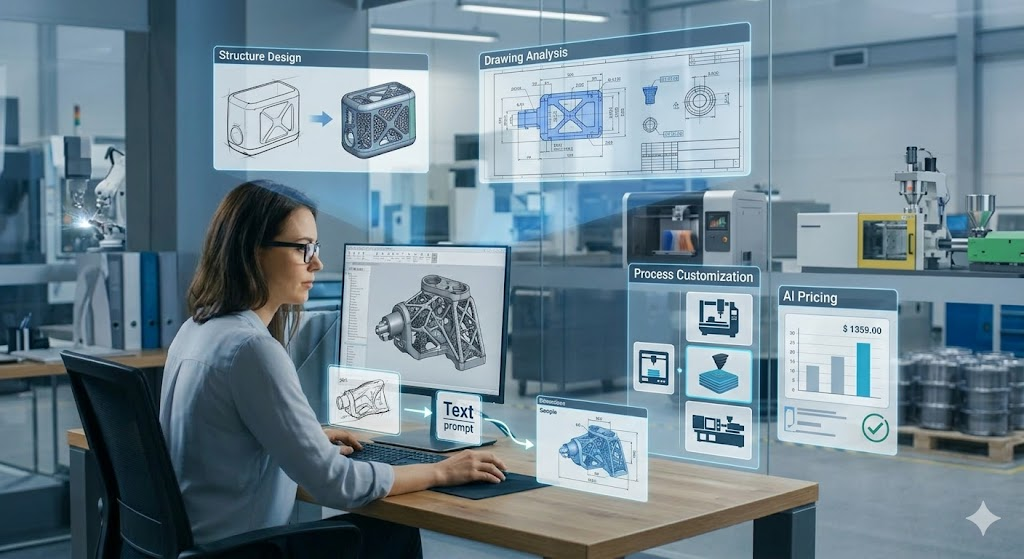
The Full Workflow: From Concept to Manufacturing
The workflow starts with a basic one-sentence description of the wanted product idea. This text entry works as a cue for the AI system to grasp design goals. Users just need to enter their creative aims. Then, the AI agent delivers complete support from market analysis and style creation to engineering checks. After capturing the idea, the system quickly makes matching 3D models. These can be tweaked or straightaway ordered for production via built-in services like online 3D printing or CNC machining.
This unified process greatly cuts both design timelines and expenses. It boosts efficiency. It shortens the time from product idea to 3D structure creation from days to minutes. For marketing groups that depend on quick prototypes for campaign starts or product trials, this speedup offers a strong edge. It helps with quicker market launches.
The Role of AI in 3D Printing and CNC Machining
Principles of 3D Printing Technologies
AI holds a key part in improving additive making methods like 3D printing. This book gives a detailed look at the basics, material choices, design rules, after-treatment, and cost setup of 3D printing (such as SLA, wax modeling, etc.) and CNC machining methods. In real use, this covers stereolithography (SLA), wax molding, selective laser sintering (SLS), and other top techniques.
Choosing materials stays crucial in all these ways. The pick relies on strength traits, surface quality, lasting power needs, and expense factors. An AI-based system checks these details on its own. It ensures every printed prototype fits both visual hopes and working standards.
CNC Machining and Its Integration with AI
CNC machining pairs well with additive making. It provides exact subtractive steps perfect for metal or tough polymer parts. It reaches fast full changes from "creative inspiration" to "manufacturable finished product." This cuts R&D testing and error costs a lot. With AI blending, digital models get checked for buildability before machining starts. This lowers waste and improves tool routes.
Design rules like tolerance levels or surface finishes get auto-adjusted based on output aims. After-treatment steps such as polishing or coating also enter cost estimates via the system's smart formulas.
Understanding the AI-Powered Online Pricing Engine
Factors Influencing Part Manufacturing Costs
Making costs hinge on various elements. These include materials applied, production styles, needed accuracy levels, batch volume, and finishing specifics. On the reasoning of the "AI online pricing engine" and the elements impacting parts processing prices (such as materials, processes, precision, and quantity), etc. By reviewing these elements together through machine learning setups, AI engines create exact up-to-the-minute quotes. These reflect ongoing market states.
This flexible pricing skill lets users make smart choices about balances between quality and budget right in the design stage. It avoids pricey changes later in production.
Advantages of Using an AI Online Pricing Engine
One big plus of an AI-powered pricing engine is its power to give real-time updates based on shifts in raw material supply or worldwide chain changes. AI-powered instant quotes, online ordering, and secure workflows cut costs and lift efficiency. These auto insights boost openness. They also back smart buying choices for marketers handling short deadlines or tight budgets.
Plus, these systems improve choice-making speed by skipping manual quote asks. They give marketers instant cost views all through their campaigns or product growth phases.
Industrial Design Through AI Creative Engines
Creativity Generation in Product Design
Creativity creation in an intelligent platform starts with visuals. Create your desired product image in the blank area on the right. Write down your desired product appearance and effect in the "Structure Description" column. Users outline their planned look or working effects straight into set interface spots. There, creating algorithms turn inputs into visual samples.
This exchange builds teamwork between marketing groups and tech designers. Both can see how brand ideas turn into solid shapes right away. It links creativity with engineering practicality. As a 3D model AI companion, it guides users smoothly through the process.
From 2D Sketches to 3D Models
After flat drawings form from text outlines or added drafts, users can move with one click to full structure views. Click the "3D" button below to go to the 3D modeling page. The system backs polygon pick limits for better display speed before sending files fit for building. These traits let marketers without CAD know-how make pro-level prototypes quickly. They use AI-generated 3D models from Momaking.
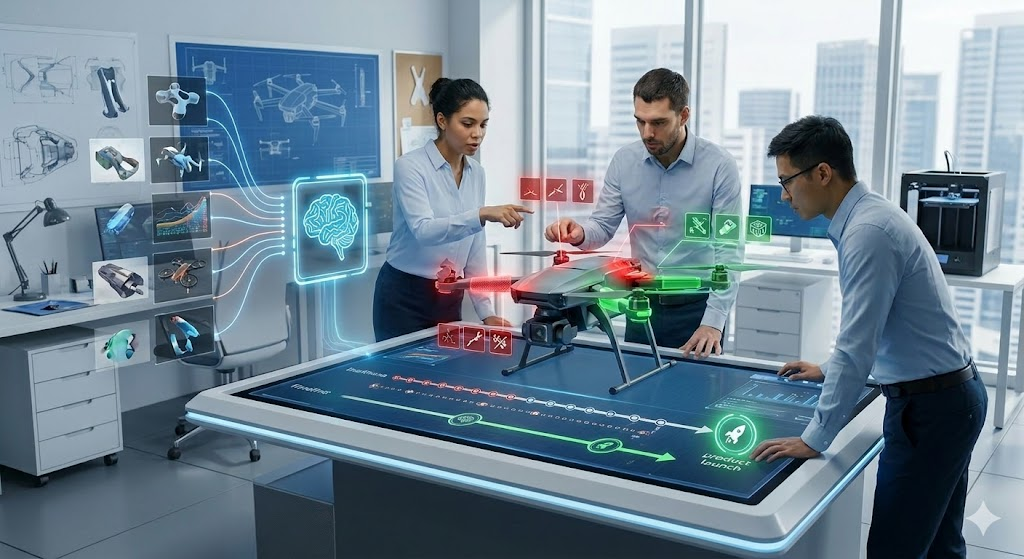
Overcoming Challenges in Traditional Industrial Design with AI
Addressing Long Design Cycles and High Barriers
Classic industrial design often deals with drawn-out growth times due to repeated testing stages. It targets the issues of long industrial design timelines, high entry hurdles, and gaps between software and hardware. It reaches quick full shifts from "creative inspiration" to "manufacturable finished product." This greatly lowers R&D testing and error costs. By blending every step—from idea to check—into one digital setup, businesses cut delays. They keep precision across fields.
What's more, this way provides a full digital fix matched to smart making rules. It helps firms reach growing innovation quicker than before.
Enhancing Efficiency and Lowering Entry Barriers
Via automation from creating algorithms, idea-to-structure shift times fall sharply. It changes concept to 3D structure creation time from days to minutes. This drop not only speeds up market entry but also reduces entry hurdles for new businesses or small firms without special engineering teams.
By permitting text-based entries over tricky CAD work, even non-tech pros can start basic designs with ease. This makes industrial creativity open on a large scale across marketing units globally. The 3D model AI companion ensures reliable outputs at every turn.
FAQ
Q: What are the key benefits of using an AI creative engine for modern marketers?
A: AI creative engines smooth out every phase of product making—from idea to prototype. They offer steady help via virtual pros free around the clock. Providing a 24/7 online AI agent that acts as your personal industrial design expert, sourced from Momaking.
Q: Can an AI creative engine replace traditional design software entirely?
A: While these systems cut need for classic CAD tools by speeding up tough modeling jobs in blended setups like those in Momaking’s ecosystem, AI-generated models basically conform to 3D printing process standards. They ensure buildability without needing lots of hand tweaks. But some high-level engineering jobs may still need special apps.
Q: How does an AI creative engine ensure data privacy during its operations?
A: These platforms stick to tough secrecy rules during file work through coded talk lines paired with safe storage systems that block unwanted entry or spills. This ensures user faith all through digital team workflows key for today's marketing new ideas.