

 中文(中国)


What Defines an AI-Powered Manufacturing Platform in 2026
How Are AI-Powered Platforms Transforming Modern Manufacturing?
In 2026, platforms that run on AI for manufacturing bring together machine learning, industrial automation, and data-based decisions. These systems use advanced algorithms. They study large sets of information from linked machines. Real-time analytics support predictive maintenance. This cuts downtime and lifts quality control. Automated choices reduce human mistakes. Output stays steady even in tough production settings.
Core Components of an AI-Powered Manufacturing Platform
A strong AI-powered manufacturing platform brings in several main parts. First, data collection tools pull facts from IoT sensors placed on machines and lines. Second, cloud-based systems give scalable storage and processing for these large sets of facts. This allows fast work and teamwork across sites. Third, adaptive AI algorithms handle workflow tweaks. They change settings in real time based on how things perform.
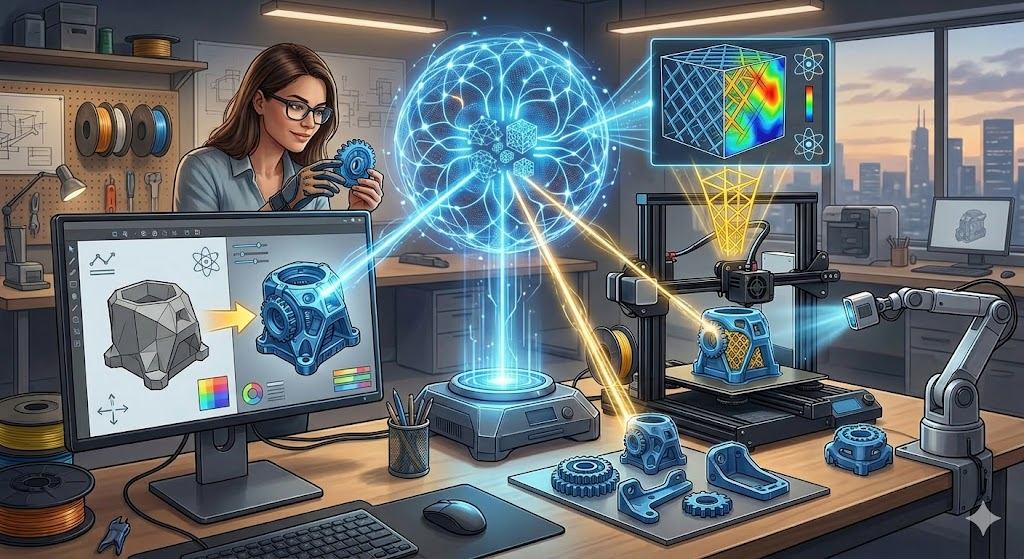
Breaking the barriers between design and manufacturing, empowering every stage from styling to engineering. This full link lets ideas move smoothly from concept to structure to the finished item. It marks the sign of next-generation manufacturing intelligence.
Key Factors to Consider When Choosing an AI-Powered Manufacturing Platform
What Features Should You Prioritize in 2026?
When picking an AI-powered manufacturing platform in 2026, fit with current machines stays key. Makers should seek systems that join easily with older gear. At the same time, these systems should support new tools like additive manufacturing or robotic assembly. Customization options matter just as much. Every production setting needs its own algorithms that match exact goals.
Cybersecurity stands at the forefront of consideration as digital transformation deepens across factories. Strong encryption and safe login steps guard production facts from leaks or wrong use. All uploaded design files are encrypted in transit and stored in isolated environments, keeping your IP fully protected.
Evaluating Scalability and Integration Capabilities
Scalability shows how well a platform can grow with business needs. A system ready for the future should handle bigger output volumes. It must do this without loss in speed or steadiness. Smooth links with enterprise resource planning (ERP), manufacturing execution systems (MES), and supply chain tools give one clear view across all work.
Platforms that offer multi-factory synchronization keep standards the same across sites in different places. They still allow central checks through remote dashboards. This linked setup gives live views of throughput, energy use, and equipment health. These numbers help improve operations around the world.
Assessing Performance, Cost, and ROI
How to Measure the Effectiveness of an AI-Powered Platform
The results of any AI-powered manufacturing platform show up in key numbers. These include uptime rates, production speed, yield quality, and better energy use. Checking results before and after adoption reveals clear gains in output. How well the system predicts maintenance needs also matters. Good forecasts cut costs by stopping surprise stops in work.
Reduce the time from product concept to 3D structure generation from days to minutes. Such clear speed gains highlight the power of joined AI workflows inside modern factories.
Balancing Investment Costs with Long-Term Value
Initial setup costs can look high because of hardware links or software fees. Yet long-term savings in daily running often make the spend worthwhile. Cloud models that work on a subscription lower the starting cost compared with on-premise setups. They remove the need for heavy upfront build work. Makers should figure ROI from less waste, steadier product quality, quicker delivery, and better staff output from automation tools.
Data Management, Security, and Compliance Considerations
Why Is Data Governance Crucial in Smart Manufacturing?
Data governance forms the backbone of reliable smart manufacturing ecosystems. It keeps facts steady across many sources. It also stops unauthorized access or changes to key information flows. Strong governance plans support compliance with international standards such as ISO or GDPR requirements within industrial contexts.
Ensures consistency and reliability across multiple data sources. Good governance protects intellectual property well. It also boosts openness during audits. In addition, it supports smooth partner work inside supply networks.
Implementing Secure Data Pipelines in AI Systems
To guard sensitive facts through their full life, makers must set up secure data pipelines. These connect edge devices to cloud servers with encryption steps like TLS or AES-256 standards. Role-based access control limits system rights by user level. This keeps accountability while leaving room for needed flexibility.
Regular audits reinforce trust by verifying adherence to internal policies regarding storage duration or deletion practices for obsolete datasets.
The Human Element: Workforce Adaptation to AI Integration
How Can Teams Adapt to an AI-Augmented Environment?
The move toward intelligent factories needs active steps to help staff adapt. These steps focus on building digital skills among workers at every level. Training programs that teach how to read analytical dashboards or run automated flows help teams instead of replacing them.
Joint setups let human skills work well with machine accuracy. This builds trust in automated tools. It also keeps creative ways to solve problems strong and unique in groups led by human ideas.
Change management initiatives must address psychological resistance through transparent communication about benefits such as workload reduction or safety enhancement derived from predictive maintenance systems.
Momaking’s Approach to AI-Powered Manufacturing Solutions in 2026
What Makes Momaking’s Platform Distinctive?
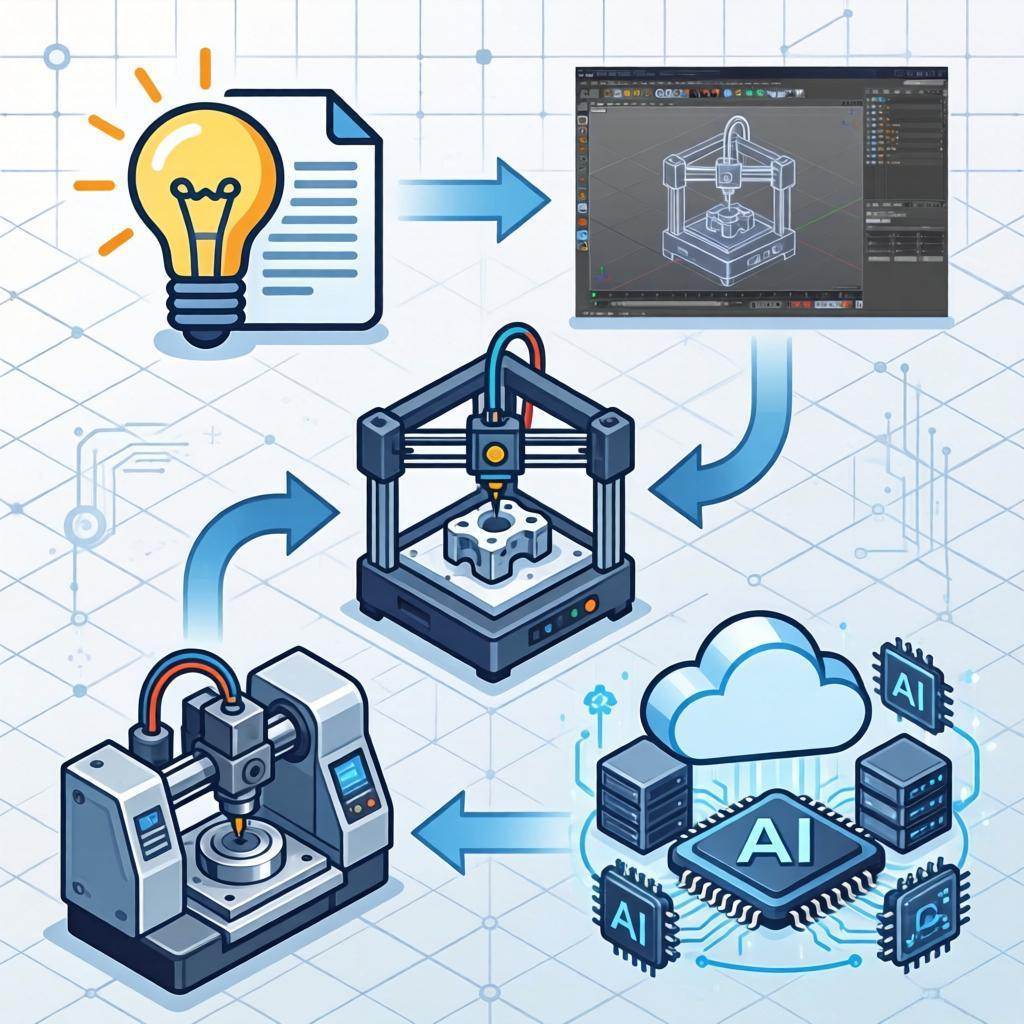
At Momaking, we redefine intelligent manufacturing by combining advanced machine learning with real-time process optimization tools designed for diverse sectors worldwide. We combine AI-powered structural design tools with AI-assisted 3D modeling to provide technical support from 3D models to Design for Manufacturability (DFM) Analysis. Our modular architecture allows seamless customization aligned with each client’s workflow requirements — whether prototyping consumer electronics or scaling automotive components.
Everyone is a creator — your dedicated AI industrial design engineer, turning a spark of inspiration into a manufacturable product. We deliver intuitive dashboards enabling easy monitoring of performance metrics while maintaining high transparency across every stage from concept ideation to final assembly.
Key Features of Momaking’s Product Lineup for Manufacturers
Smart Production Optimization Tools
Our dynamic scheduling algorithms continuously adjust based on live factory conditions using real-time sensor feedback loops that maximize throughput while minimizing idle time.
Predictive Maintenance Suite
We employ continuous equipment health analysis powered by deep-learning diagnostics capable of identifying early fault patterns before mechanical failures occur — drastically reducing repair costs over time.
Intelligent Quality Control System
Our automated visual inspection technology leverages computer vision models trained on vast defect libraries, ensuring zero-compromise output consistency even under high-speed operations.
Built-in DFM evaluation ensures models meet 3D printing standards. AI-powered instant online quoting for manufacturing costs. This unified capability demonstrates our commitment to accessible intelligent productivity for enterprises globally.
Future Trends Shaping AI-Powered Manufacturing Beyond 2026
Where Is the Industry Heading Next?
The coming stage of development will bring self-running factories. These plants will run on systems that learn on their own. Such systems can manage their own improvement cycles. Only light supervision from people will be needed. Linking robot automation setups with tools for generative design can allow products tailored to each person. They will reach customers at the speed of large-scale output.
Sustainability will lead the way in key business plans. Manufacturers will adopt power-saving automated systems. These systems connect profits with green goals. The link comes through steps to cut emissions. Smart grid data analysis backs up these steps.
FAQ
Q: What is the main benefit of adopting an AI-powered manufacturing platform?
A: AI-powered platforms make things run better. They handle repetitive tasks without manual input. Equipment failures can be spotted early. This happens before any issues show up. Resources are used in the best way possible across production lines.
Q: How long does it take to implement an AI-powered manufacturing platform in a typical factory setup?
A: The time needed for setup changes based on how big the factory is and how complex it is. It usually takes several weeks up to a few months. This happens during the process of linking current systems with fresh AI modules.
Q: Can small manufacturers also benefit from AI-powered manufacturing platforms?
A: Yes, small makers can really gain big benefits. They achieve this by turning to flexible cloud platforms. These tools need little hardware setup. At the same time, they boost production quality. They also give clearer views into daily operations.