AI product design can compress selected development programs from months to weeks, but generation speed alone does not create that result. Major delays often sit between design tasks: incomplete requirements, sequential reviews, repeated handoffs, late manufacturability feedback and prototypes without a defined question. AI creates value when faster analysis targets those constraints while engineers retain ownership. The goal is to reduce waiting and avoidable iteration across the critical path.
Where Product Development Time Actually Accumulates
Waiting and Rework Often Outlast the Design Task
A designer may create a concept in hours, yet the project can wait days for comments, missing dimensions or supplier feedback. Vague requirements produce different interpretations, and changes travel back through geometry, drawings, cost review and prototype planning.
A visually accepted enclosure may later reveal an inaccessible fastener, undefined interface or feature that conflicts with the selected process. The team pays for the same decision twice because the necessary question appeared too late. Effective AI product design must shorten feedback distance, not merely produce more images.
Map the Critical Path Before Automating Design Work
The team should map the decisions controlling release: requirement approval, concept selection, structural definition, design-for-manufacturing review, prototype evidence and final sign-off. Showing dependencies and queues exposes whether concept generation, engineering capacity, supplier response or approval discipline constrains the schedule.
Automation should target a measured constraint. AI can organize alternatives when concept comparison is slow, while earlier analysis helps when late issues drive revisions. Approvals waiting for incomplete evidence need a better gate, not another generated option. A critical-path view keeps investment tied to elapsed time.
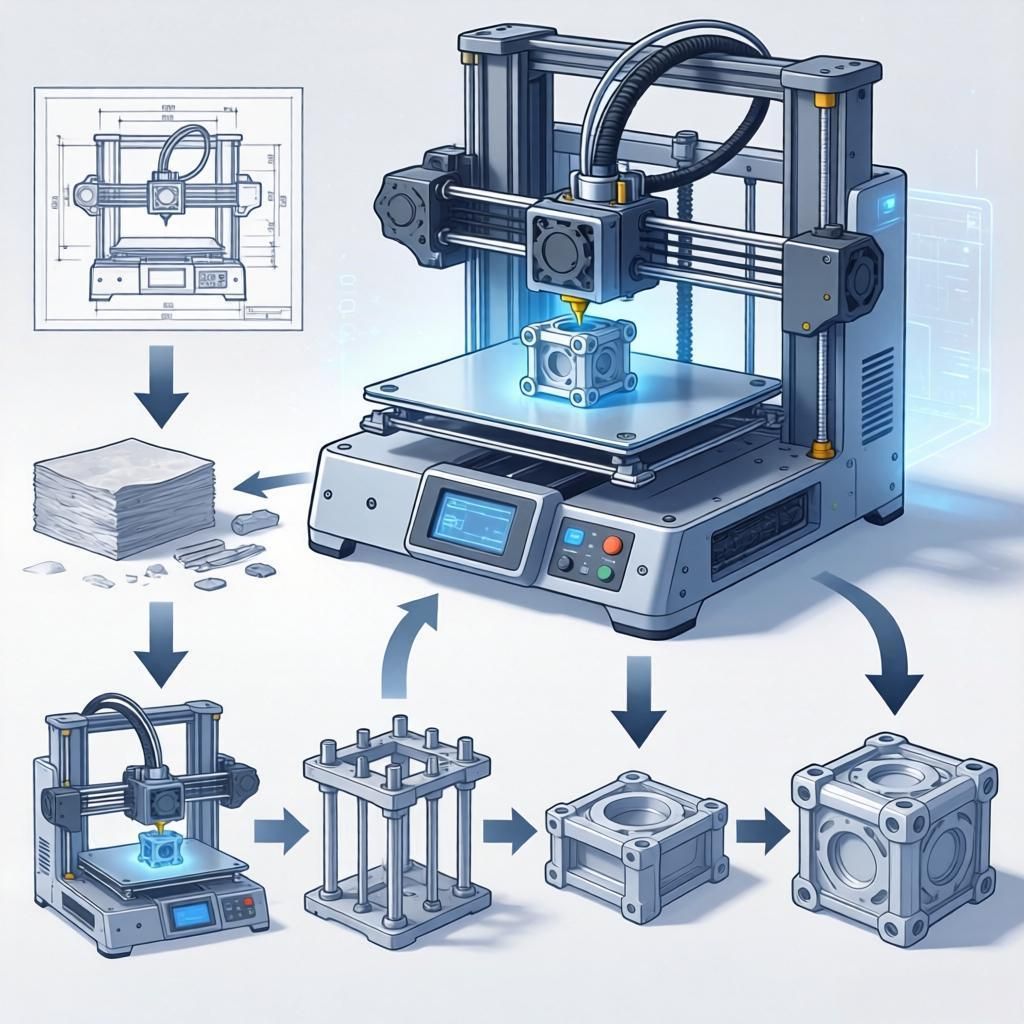
How AI Product Design Compresses Early Design Loops
Turn a Product Brief Into Comparable Concepts
A controlled brief describes the user, function, environment, interfaces, preferred materials and fixed constraints. AI product design can create several directions while holding those conditions steady, allowing the team to compare options against the same questions.
Each option should retain the input version and identify the changed variable, such as grip form, control location or enclosure proportion. Reviewers can then discuss trade-offs instead of debating a render without context. Rapid generation becomes useful when it produces comparable evidence.
Use Parallel Evaluation to Eliminate Weak Directions Earlier
Promising concepts can be screened in parallel for user fit, functional arrangement, interfaces and manufacturing questions. AI-assisted analysis may identify conflicts and prioritize follow-up work, but engineers decide which assumptions are acceptable and which require higher-fidelity analysis.
Parallel evaluation prevents weak directions from consuming detailed modeling time. The team advances a smaller set with recorded reasons and known uncertainties, reducing design iteration without transferring approval responsibility to a model.
Reduce Rework at the Engineering and DFM Handoff
Convert the Selected Direction Into Controlled Geometry
Concept approval should trigger a defined engineering handoff containing scale, key dimensions, part boundaries, mating interfaces, material assumptions and revision ownership. Critical features should be editable geometry rather than a visual mesh or unexplained surface.
If engineering receives only a render, the team must rediscover requirements and rebuild decisions. A controlled model preserves approvals and labels unresolved items. AI product design then speeds the transition instead of moving ambiguity downstream.
Bring Manufacturing Constraints Into the Design Review
Manufacturing input should arrive while the model can still change economically. Reviewers consider process, material, quantity, tool or support access, assembly and inspection. CNC machining, 3D printing and injection molding have different constraints, so a generic feasibility label is insufficient.
Early design for manufacturing exposes questions before commitment to detailed drawings, tooling or a broad prototype build. Supplier and engineering judgment remain necessary, but earlier feedback reduces the chance of major redesign.
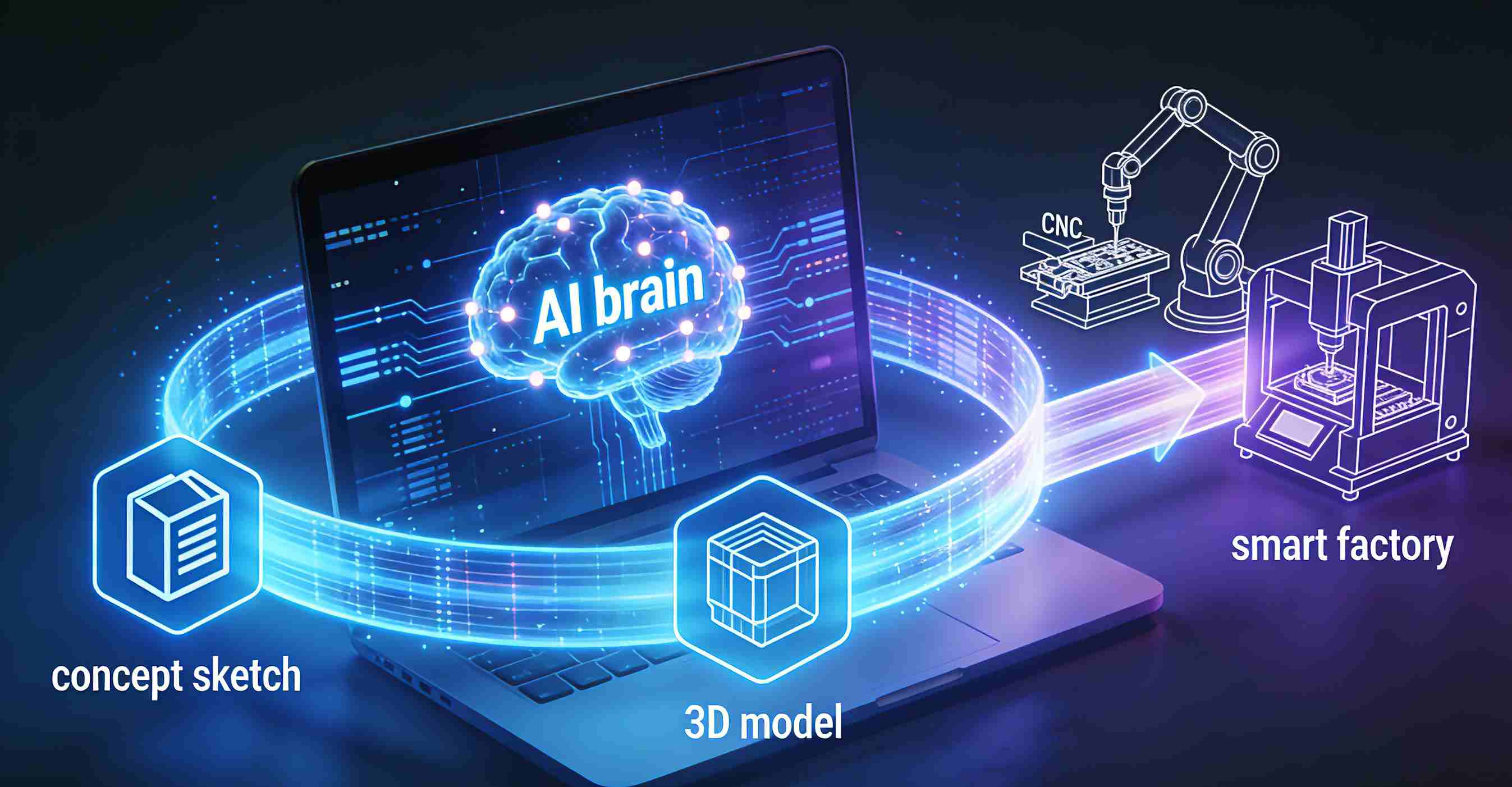
Shorten the Prototype Feedback Loop
Give Each Prototype a Defined Decision to Resolve
A prototype should have a written purpose. One sample may test appearance and handling; another may check assembly, interfaces or a material-dependent function. Define the observation, acceptance condition and decision owner before ordering.
Focused prototypes prevent every sample from becoming a general demonstration. Results can be marked pass, revise or unresolved and linked to the relevant CAD version, giving the feedback loop a clear exit.
Close Each Prototype Loop With a Revision and Approval Decision
After testing, the team records what changed, why and which evidence supports the revision. A failed assumption may require a new model or process; a successful test may permit the next gate.
This closure lets AI product design support speed without weakening control. AI may organize observations or prepare alternatives, while engineers approve the change and next test. Learning then produces an explicit action rather than another open discussion.
Measure Whether Months Really Become Weeks
Track Elapsed Time, Waiting, Revisions and Escaped Issues
Teams need a baseline before claiming shorter product development time. Track elapsed days per stage, waiting time, substantial revisions and problems found after a stage was considered complete. Separate active engineering hours from queue time.
A quicker concept stage is not an improvement if more issues escape into prototypes or production review. The aim is a shorter cycle with comparable or better evidence at each gate, not simply a faster first output.
Compare a Baseline With a Bounded AI Pilot
A bounded pilot makes comparison credible. Select one product category and compare its defined workflow with similar prior work. Keep inputs, reviewers and exit criteria consistent enough to identify where time changed.
The pilot should show which delays were removed and which remained. The result may justify broader adoption or reveal that approvals, supplier response or incomplete requirements still control the schedule. “Months to weeks” is a workflow-specific target, not a universal promise.
How Momaking Supports a Faster Design-to-Manufacturing Cycle
Connect Structural Review With Process Selection
At Momaking, we support structural design that can begin with a customer image or concept. The workflow includes image processing, 3D modeling, structural analysis, visual feedback and customer participation. Clear functions, interfaces, materials and quantities turn an approved direction into a more actionable structural and manufacturing discussion.
This connection can reduce avoidable handoff loops because the design is reviewed alongside a likely physical route. Momaking does not replace customer approval or guarantee a fixed schedule for every project. The value lies in keeping structural questions and manufacturing requirements connected.
Use the Right Prototype Route for the Next Decision
Momaking provides 3D printing, CNC machining, mold manufacturing and injection molding services. The next route depends on geometry, material, quantity and the evidence required. A fast printed model may support an appearance or fit decision, while a machined sample may be more useful for a material or interface question.
Selecting the route around the next decision keeps physical work focused. The team can review the result, update the controlled design and decide whether another iteration or a production step is justified. This creates a more disciplined design-to-manufacturing cycle.
FAQ
Q: Does AI Product Design Always Reduce Months to Weeks?
A: No. The outcome depends on clear requirements, connected reviews, fast decisions and appropriate validation. AI cannot remove delays caused by missing ownership, supplier constraints or unresolved product risks.
Q: Which AI Product Design Decisions Must Engineers Still Approve?
A: Engineers remain responsible for requirements, geometry, materials, interfaces, safety, manufacturability, test evidence and release. AI can prepare options and analysis, but cannot accept those project risks.
Q: What Should a Team Send Momaking to Start Faster?
A: Provide a clear brief, reference files, intended function, known dimensions, interfaces, material expectations, quantity and the question the first prototype must answer. Complete inputs reduce clarification and handoff delays.